 简体中文
 English
 日本語
 한국어
 Français
 Deutsch
 Español
 Português
 Русский
 العربية
 ไทย
 Tiếng Việt


1. Sensor Activation: Essential for Commercial, a Bonus for Residential
The core value of sensor faucets lies in touchless operation. In public restrooms, hospitals and commercial kitchens, reducing hand contact with the faucet lowers the risk of cross-infection. In residential settings, sensor faucets are especially suitable for households with elderly people or children, as operation is easier.
In terms of water savings, sensor faucets can significantly reduce water consumption under proper use conditions. Test data shows that compared with traditional single-handle faucets, sensor faucets reduce hot water consumption by about 23.7% and cold water consumption by about 32.7% during the test period. Some branded products achieve water savings of up to 50% through flow restriction technology.
The SL-054 touchless sensor basin faucet from TKJBATH targets touchless handwashing needs, featuring a deck-mounted sensor outlet and a brass body with a gunmetal-grey finish.
Power supply options: There are three main power supply options for sensor faucets — battery-only, AC adapter-only, and battery + AC dual supply. The battery option is the most flexible to install: 4 AA alkaline batteries last about 1 year at typical usage frequency, approximately 400,000 on/off cycles. The AC + battery dual supply automatically switches to AC when available and conserves battery power, and switches back to battery mode during power outages. If your installation location is not convenient for wiring, the battery option is more practical; for new builds or renovation projects, the AC option eliminates the maintenance cost of battery replacement.
2. Digital Temperature Display: A Feature That Improves User Experience
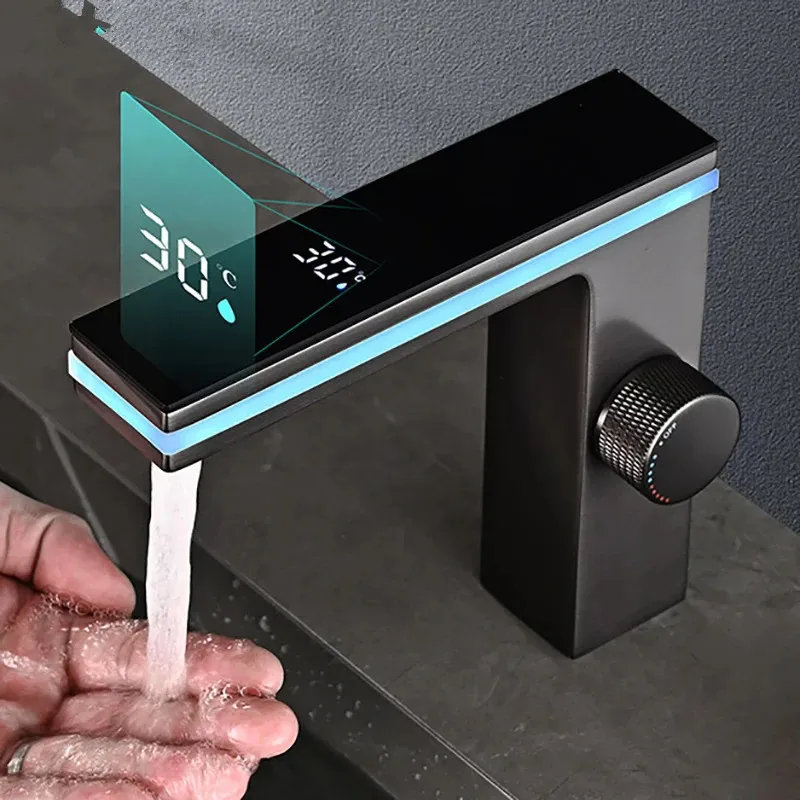
Digital faucets integrate a temperature display above the handle or at the spout, allowing users to see the water temperature directly. There are currently two mainstream display solutions:
Water-powered digital display: Uses the kinetic energy of water flow to power the display, no battery required. The SL-671 water-powered temperature-display kitchen faucet from TKJBATH uses this solution, with a pull-out spray head and 360-degree rotation, and a gunmetal-grey brass body. The advantage is maintenance-free operation; the disadvantage is that display brightness is affected by water flow.
Battery-powered digital display: More stable display, and some products also support settings adjustment via Bluetooth or app. The SL-058 gunmetal-grey digital basin faucet from TKJBATH belongs to this category, with a brass body and single-handle deck mounting.
The digital display feature is well accepted in high-end residential and hotel projects, especially in hotels where guests can see the water temperature directly, reducing water waste when adjusting temperature. However, if your target market is price-sensitive, the cost increase of the digital display feature needs to be evaluated.
3. Pull-Out & Pull-Down: Practical Upgrade for Kitchen Faucets
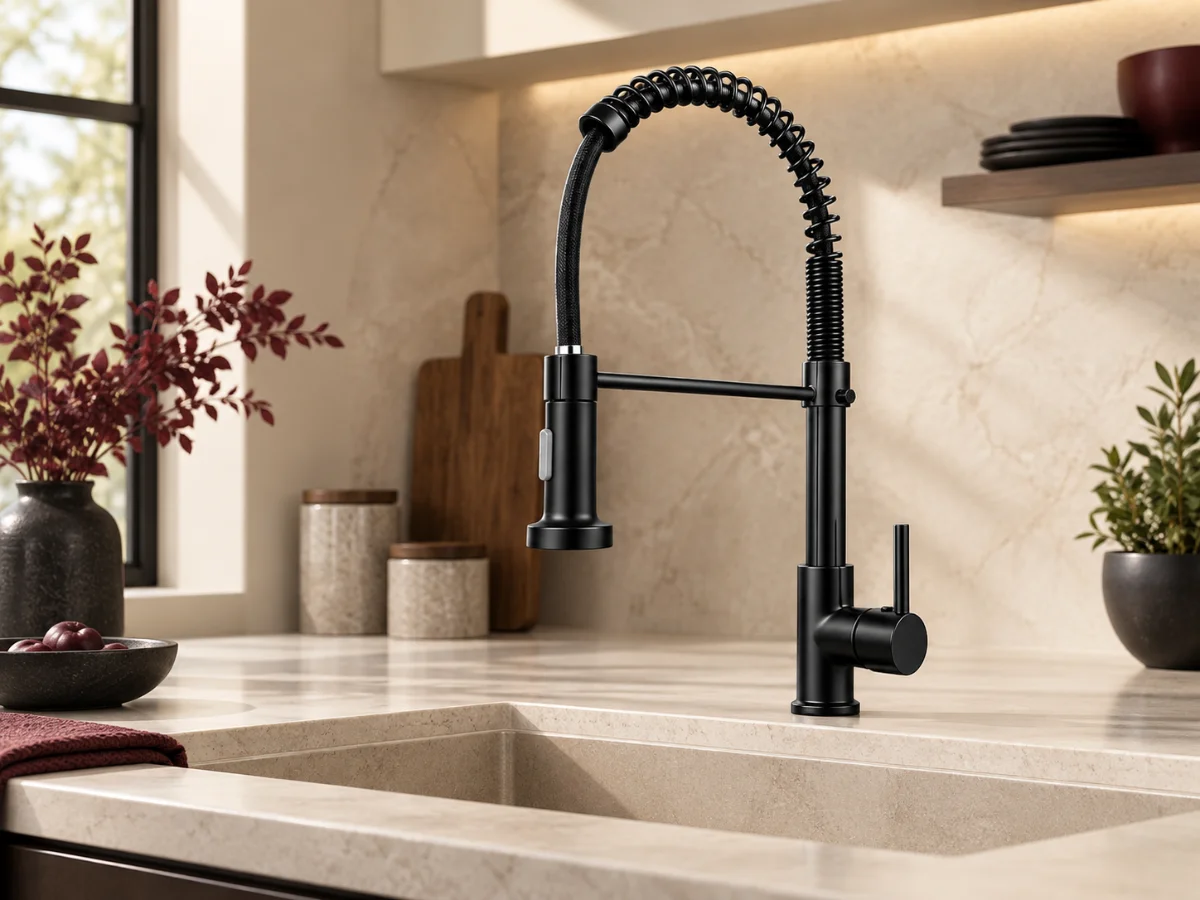
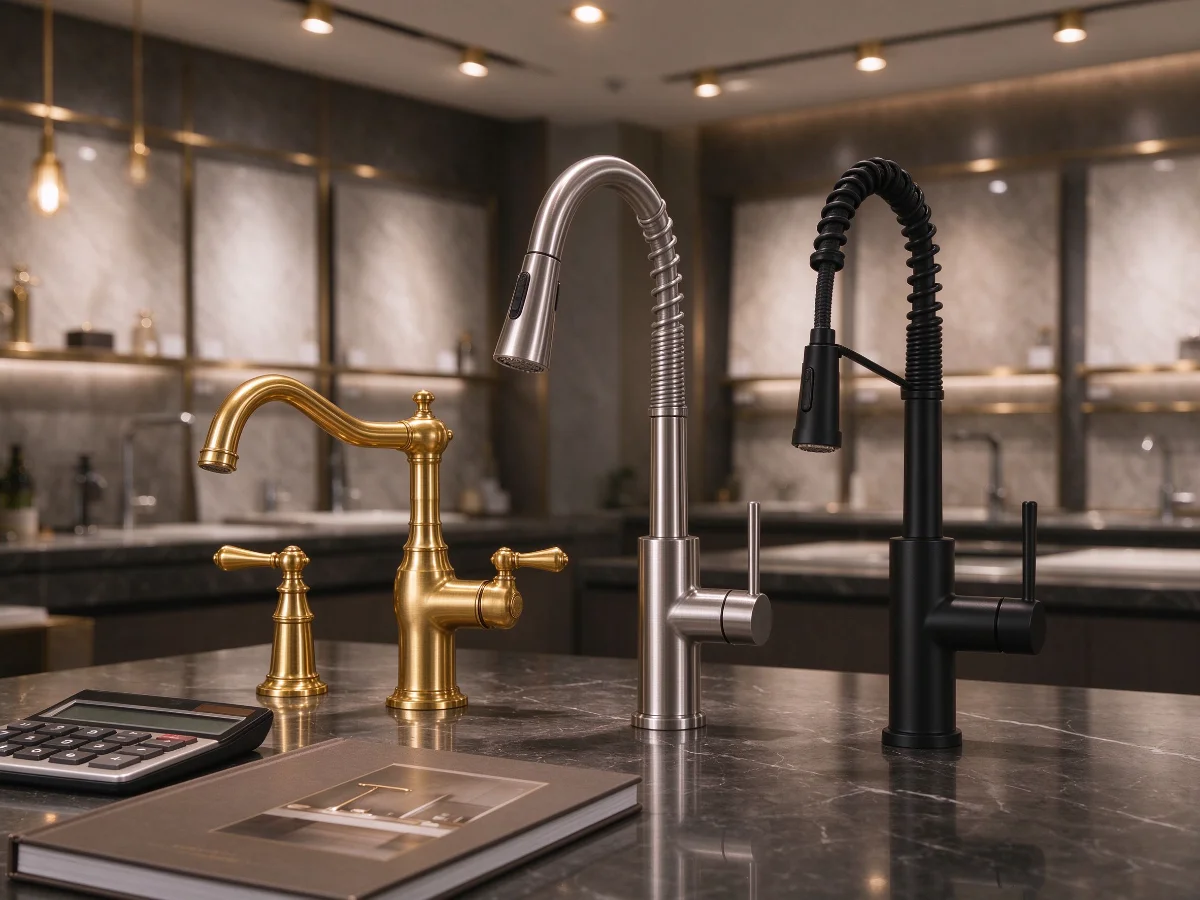
The pull-out and pull-down spray structure is one of the most practical feature upgrades in kitchen faucets. Compared with a fixed spout, a pull-out spray head can cover the entire sink area, making it easier to clean pots and rinse sink corners.
TKJBATH offers multiple pull-out/pull-down solutions:
- SL-009 brushed 304 stainless steel pull-out kitchen faucet, 360-degree swivel spout
- SL-014 black spring pull-out kitchen faucet, dual-mode spray head
- SL-609-1 gunmetal-grey pull-out kitchen faucet, dual-mode outlet
- SL-610-1 magnetic spray head kitchen faucet, supports magnetic docking
- SL-684 four-mode waterfall kitchen faucet, waterfall outlet with 360-degree rotation
Magnetic docking is a feature detail worth noting. Traditional pull-out spray heads rely on gravity for retraction and need to be pushed back manually after use. The magnetic solution uses magnetic force to automatically pull the spray head back into the dock, making operation smoother. If your target market is retail-focused, magnetic docking is a selling point worth highlighting.
4. Feature Selection & Market Matching
| Feature | Commercial Projects (Hotel/Hospital/Office) | Residential Retail | E-commerce Channel |
|---|---|---|---|
| Sensor activation | Strong demand | Moderate demand | Differentiation point |
| Digital temperature display | Moderate demand | High acceptance in premium segment | Good visual presentation |
| Pull-out/pull-down | Strong demand in kitchens | Strong demand in kitchens | Standard |
| Magnetic docking | Average | Improves experience | Usable as a selling point |
| Thermostatic control | Strong demand in hotel showers | Mid-to-high-end residential | Requires scenario-based marketing |
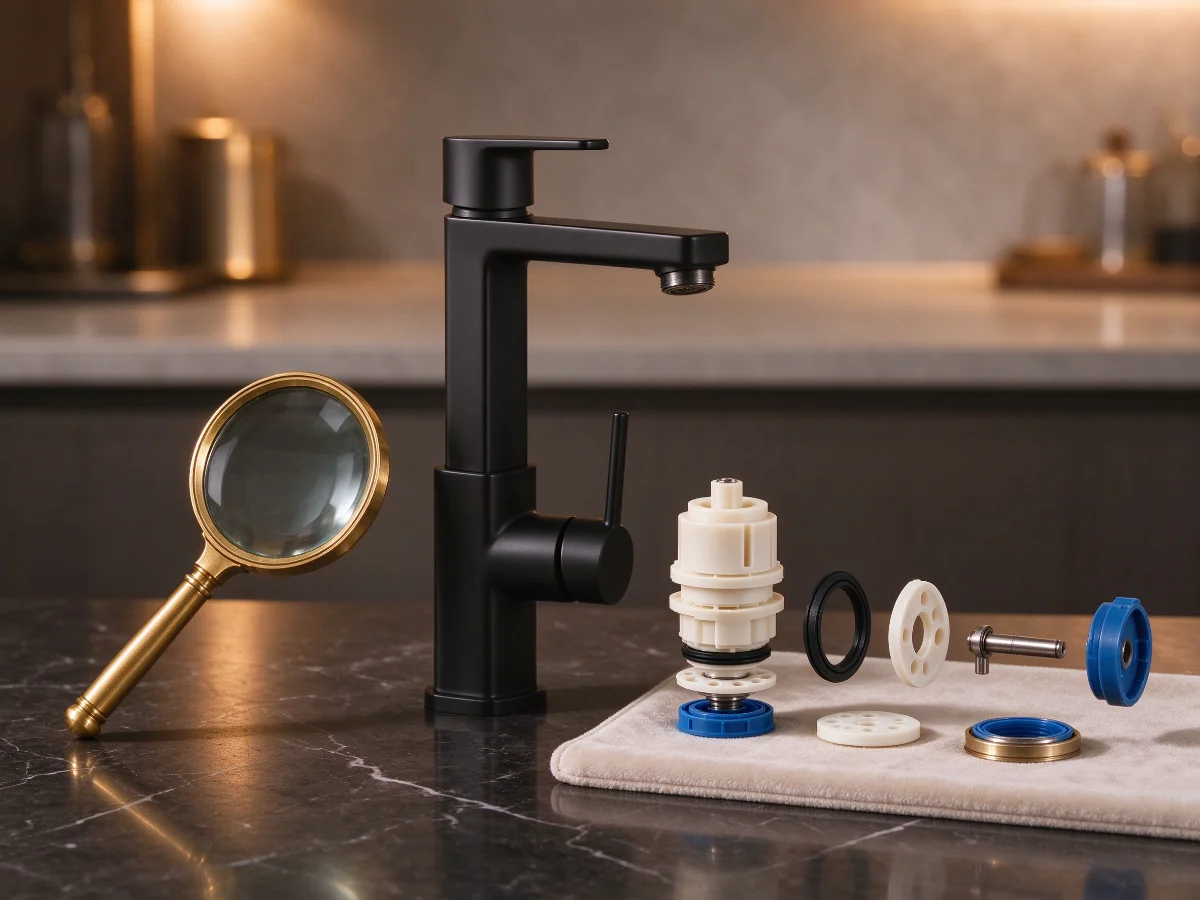
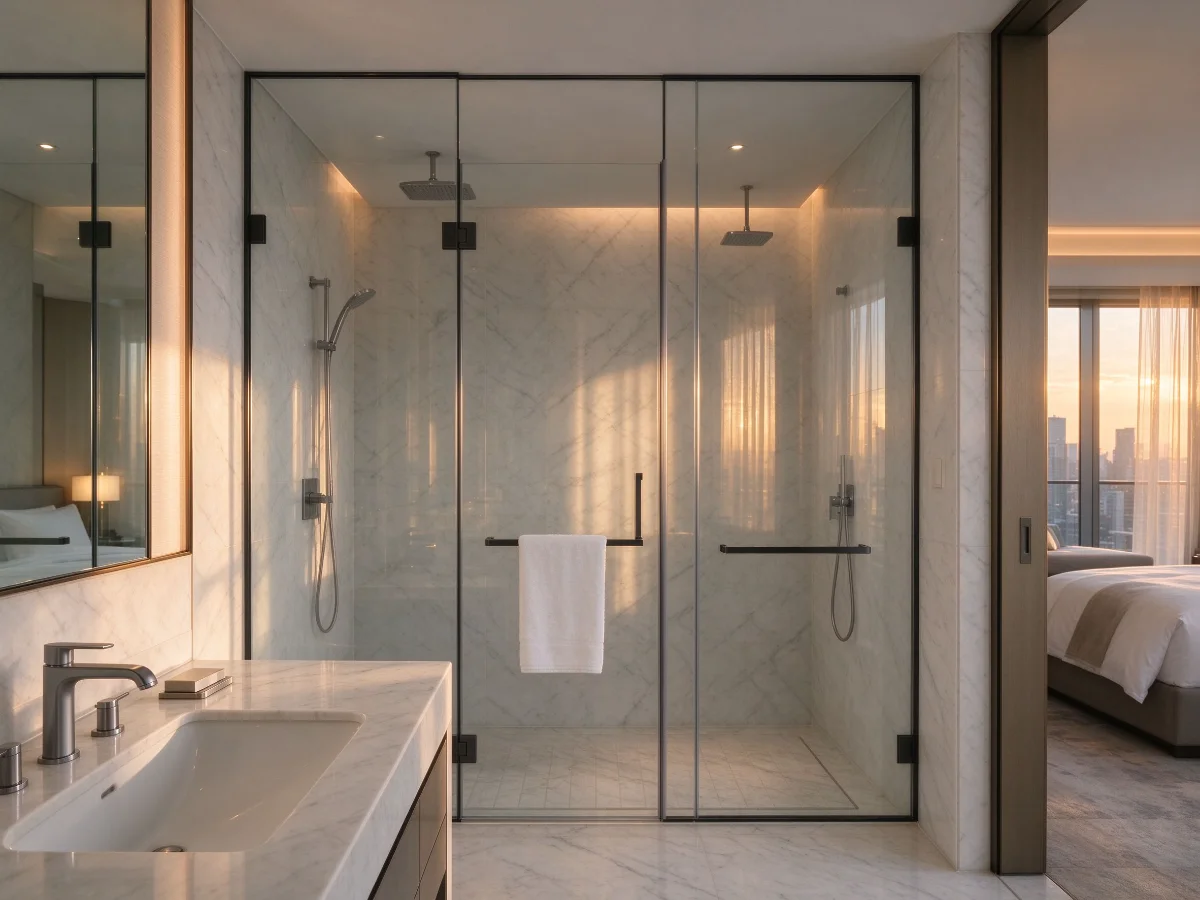
Thermostatic shower systems (such as the SL-036 wall-mounted thermostatic shower system from TKJBATH) are standard in hotel projects. The core principle of the thermostatic cartridge is to sense the outlet temperature in real time through a temperature-sensitive element, automatically adjust the hot/cold water mixing ratio, and keep the outlet temperature stable when cold water pressure fluctuates.
5. Key Questions Before Purchase
Before finalizing a smart feature plan, it is recommended to confirm the following information:
Sensor method of the faucet. Different products have different sensing distance, sensing angle and response speed. Infrared sensing is the mainstream solution; some products use a dual-sensor design (front + side), with the front sensor for quick on/off and the side sensor supporting a continuous flow mode of up to 3 minutes.
Display content of the digital faucet. Some products only display temperature, while others can also show usage duration or water volume. Confirm whether the display content matches the habits and regulatory requirements of the target market.
Power supply and maintenance. The battery replacement cycle, AC adapter specifications and installation requirements should be clearly stated in the product description to avoid problems being discovered by the end user after installation.
Certification requirements. Since smart faucets add electronic components, certification requirements may differ from regular faucets. The cUPC certification for the North American market has additional requirements for the electrical safety of electronic faucets; it is recommended to confirm whether the factory already has relevant certifications when selecting models.
Warranty coverage. The warranty period for electronic components of smart faucets (sensors, displays, solenoid valves) is usually shorter than that of the main body. Confirm the coverage of electronic components in the warranty terms and communicate this clearly on the product page or in the manual.
Frequently Asked Questions (FAQ)
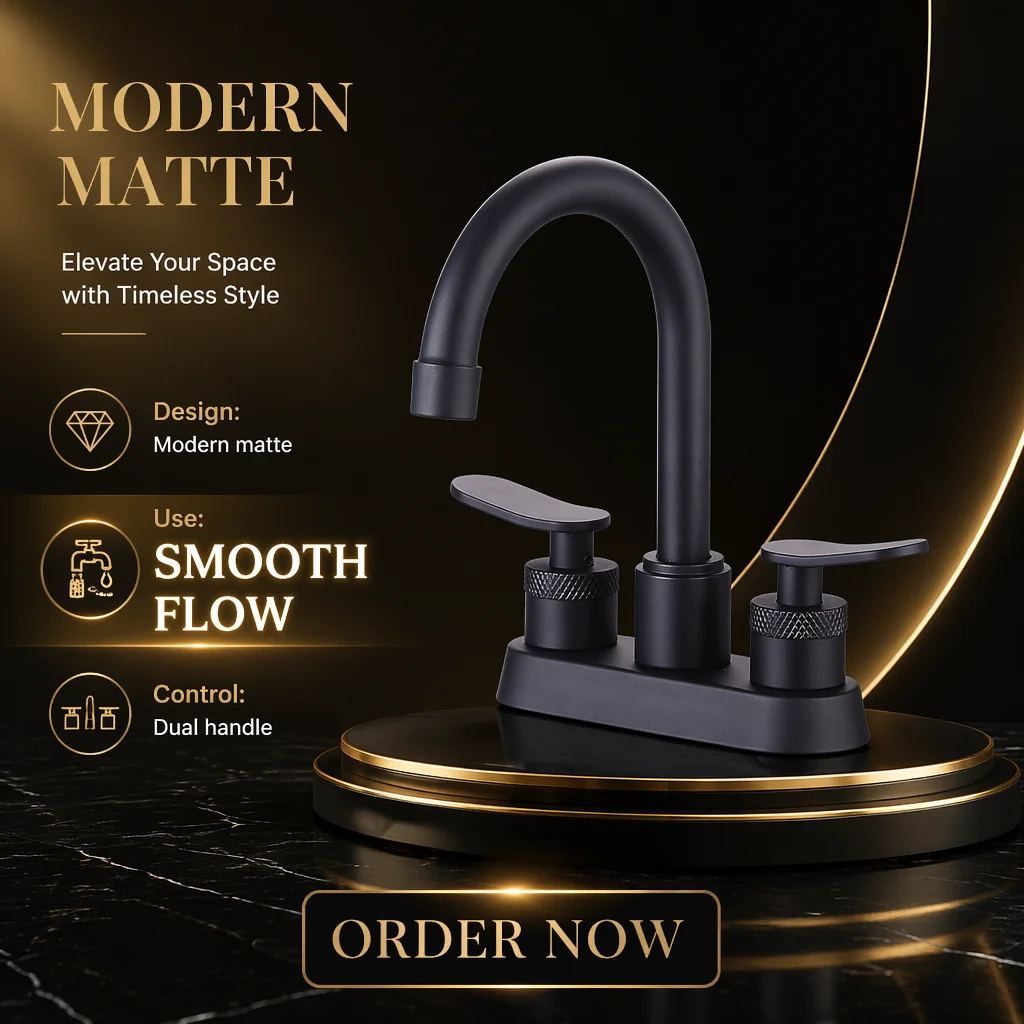
- What is the difference between smart and regular faucets? Smart faucets add electronic functions such as touchless sensor activation, digital temperature display, or thermostatic control, improving user experience and saving water.
- Are smart faucets suitable for all markets? The suitability of each feature depends on the market. Sensor activation suits commercial projects, digital display is accepted in hotels and high-end residential, and pull-out is essential in kitchens.
- What are the maintenance requirements for smart faucets? It depends on the power source: batteries need periodic replacement (about one year), while AC+battery systems reduce maintenance needs.
- Are certifications available for smart faucets? [To be verified: specific certification requirements for smart faucets in the target market, please contact TKJBATH for details].
Start Your Smart Faucet Project
Ready to select the right smart features for your market? Contact TKJBATH for advice on suitable models, MOQ and certification requirements. Our team will help you find the optimal solution for your needs.