 简体中文
简体中文  English
  한국어
한국어 
1. Faucet Body Materials: The Real Differences Between Three Common Choices
Faucet bodies on the market today mainly fall into three categories: brass, stainless steel, and zinc alloy. Their performance differences are greater than many buyers expect.
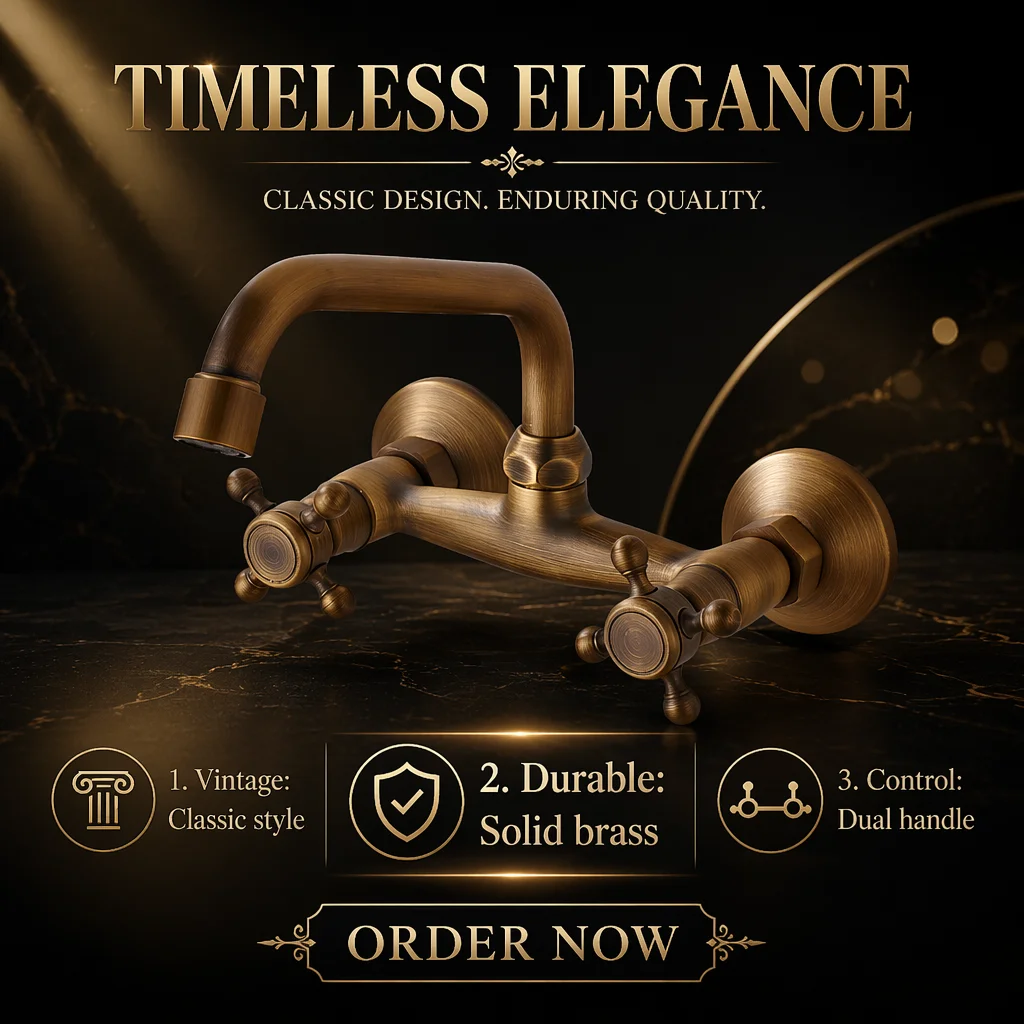
Brass is the most mature choice. A solid brass faucet body offers a long service life and resists leaks and corrosion; durability improves further when dezincification-resistant (DZR) brass is used. Brass can be machined to tighter tolerances, making it suitable for structures that require precise fits, such as the housing for a ceramic cartridge. TKJBATH products such as the SL-004 vintage two-handle lavatory faucet and SL-001 wall-mounted lavatory faucet use brass bodies.
304 stainless steel stands out for corrosion resistance and is especially suited to humid environments. Stainless steel faucets are reliable, but they generally do not last longer than high-quality brass models; whether the extra cost is worthwhile depends on the specific project. TKJBATH products such as the SL-009 brushed 304 stainless steel pull-down kitchen faucet and SL-714 deck-mounted single-cold swivel faucet fall into this category.
Zinc alloy is the lowest-cost option. Zinc alloy faucets are inexpensive and commonly used in entry-level products, but they are less durable than brass and more prone to corrosion and aging after prolonged water exposure. Zinc alloy has better formability than stainless steel, but its strength and durability fall short of brass, and it can deform under load during manufacturing or use. For long-term projects or finished products, zinc alloy is better suited to projects with limited budgets and lower long-term durability requirements.
When recommending to clients, a practical rule of thumb is: if the target market has clear service-life requirements (such as hotel projects or high-end apartments), brass or stainless steel is the safer choice; for short-term rental properties or budget-sensitive one-time projects, zinc alloy can help control costs.
2. Cartridges: The Core Component That Determines Feel and Service Life
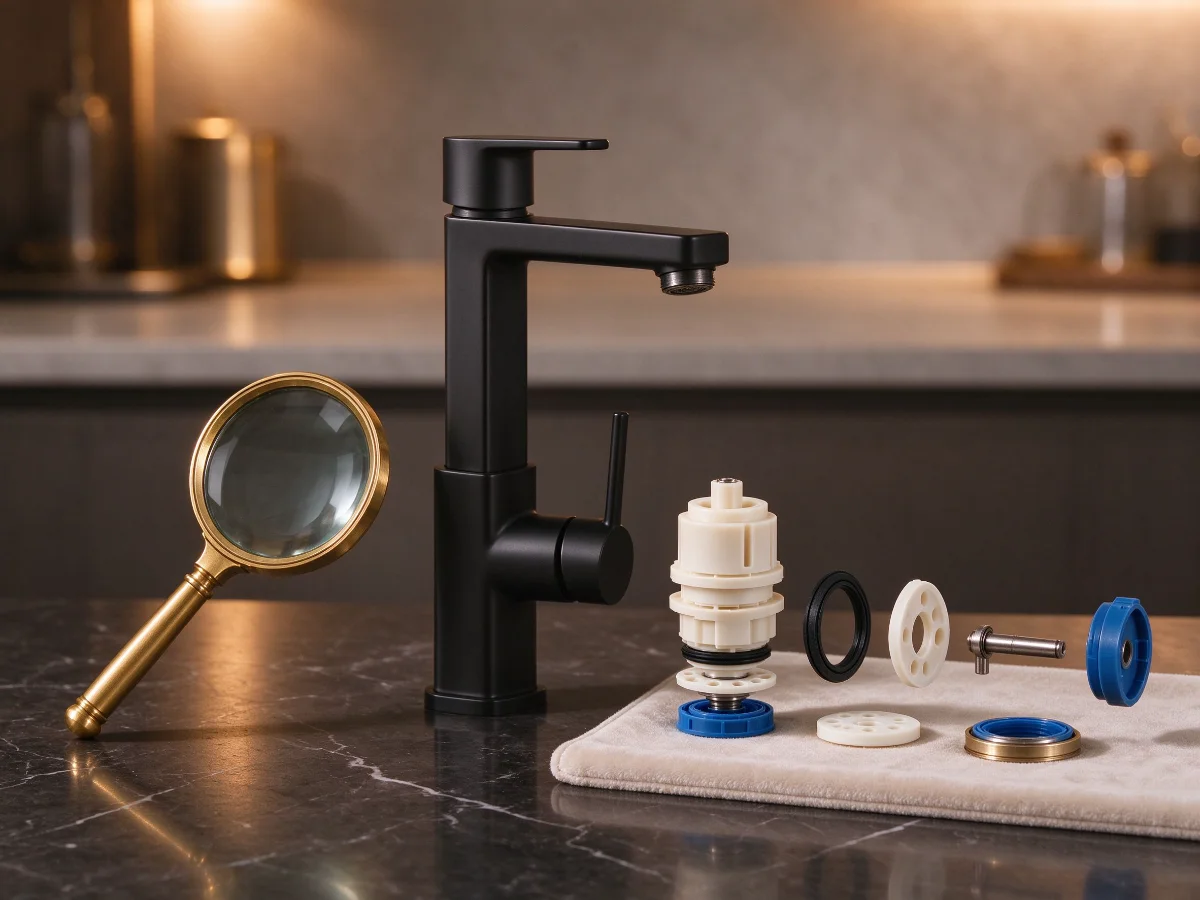
The cartridge is the most critical component inside a faucet, directly affecting handle feel, water flow stability, and repair frequency.
Ceramic cartridges are the current mainstream solution. In laboratory testing, a high-quality ceramic cartridge can exceed 500,000 on/off cycles—equivalent to 68 uses per day for 20 years without measurable leakage. Ceramic cartridges perform better under hard water conditions and offer better long-term durability than brass cartridges.
Note that mineral deposits in hard water can shorten the life of any cartridge, and there is little difference between ceramic and brass in this regard. Therefore, when selling into hard water areas, it is advisable to remind end users in the installation instructions to clean the aerator regularly to reduce the effect of deposits on the cartridge.
3. Finishes: Not Just Appearance—A Durability Issue
The finish determines how well the product's appearance holds up in the end user's hands. There are currently three mainstream processes:
Electroplating is the most common process, with chrome plating as the typical example; it produces a mirror-like surface and offers good durability. However, heavy-duty scouring pads can leave scratches on chrome surfaces.
PVD (physical vapor deposition) is currently the most durable finish process. PVD coating hardness is about 3 times that of conventional electroplating, with scratch resistance up to 10 times higher. PVD also eliminates the discoloration issues common with electroplating and organic coatings—once the clear protective layer of a traditional coating is scratched, it loses protection, whereas PVD's decorative layer is itself durable.
Powder coating is mainly used for colors such as matte black. It costs less, but its durability is not as good as PVD. Some brand data shows that PVD-treated matte black outperforms powder-coated versions in corrosion resistance, fade resistance, and scratch resistance.
For hospitality, high-end residential, or markets requiring long warranties, PVD is the more reliable option. If the target is the mid-range retail market, electroplating is sufficient.
4. Selection Logic for Six Mainstream Finishes
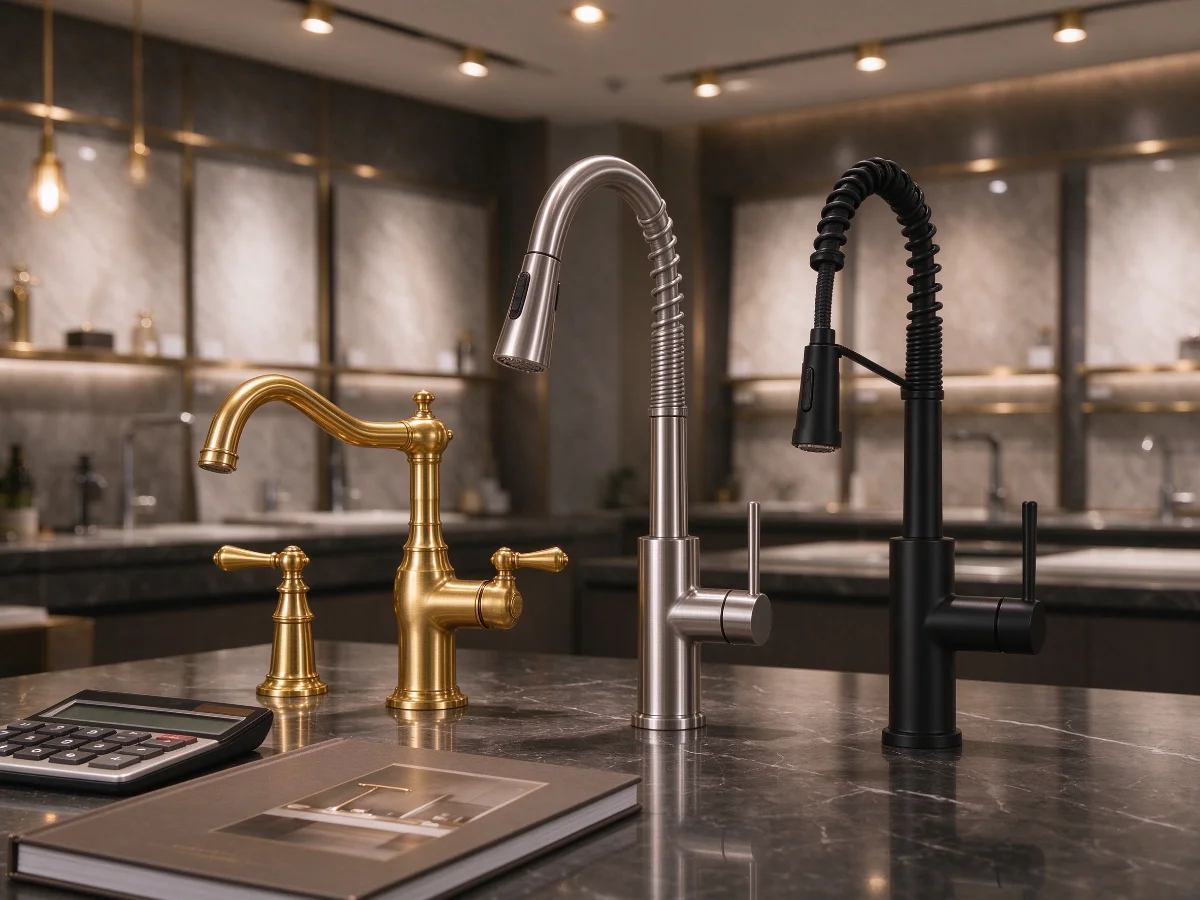
Based on market data and end-user feedback, the six best-selling finishes are: chrome, brushed nickel, matte black, brushed gold, gunmetal, and white.
Chrome is a classic choice with a mirror finish. It suits modern and traditional styles and is easy to maintain.
Brushed nickel has a soft, fine surface with a warm tone. It suits many styles and is a “safe” choice. It pairs well with warm wood and neutral stone.
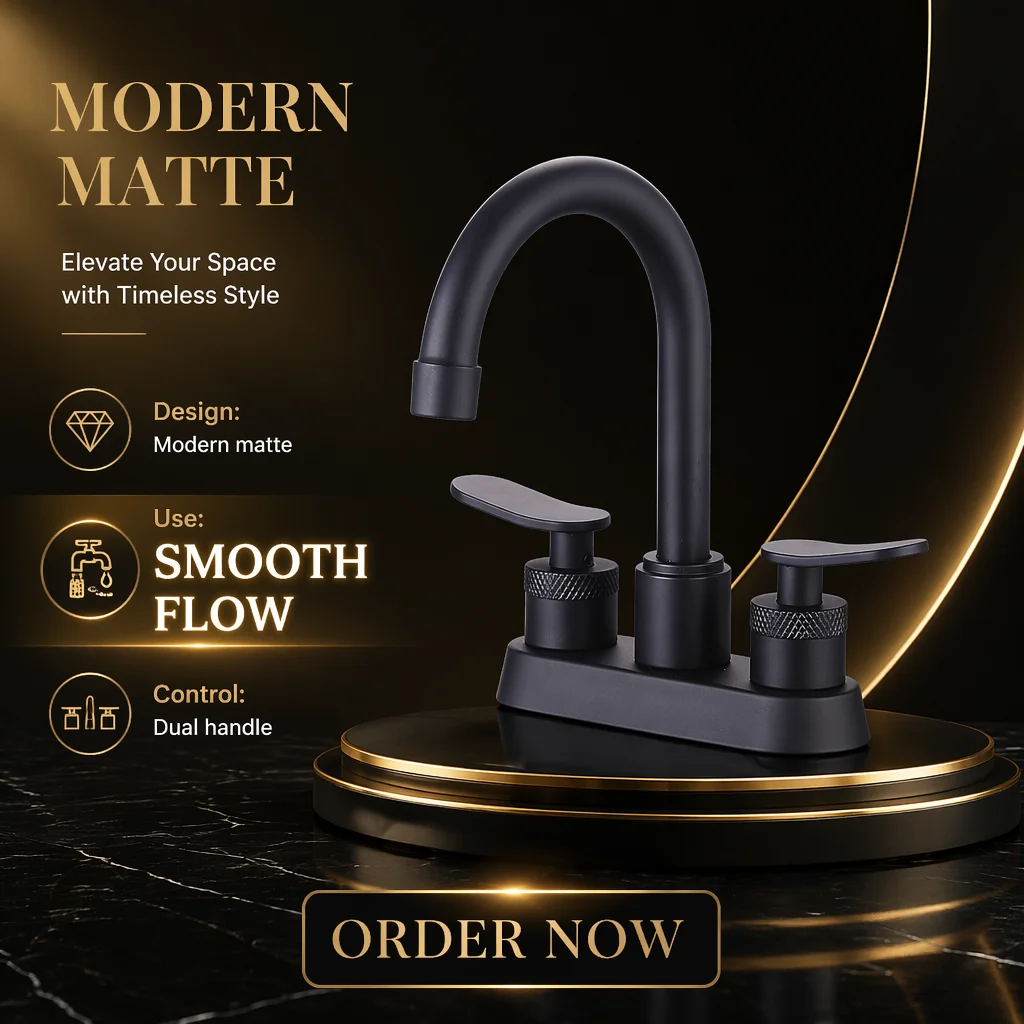
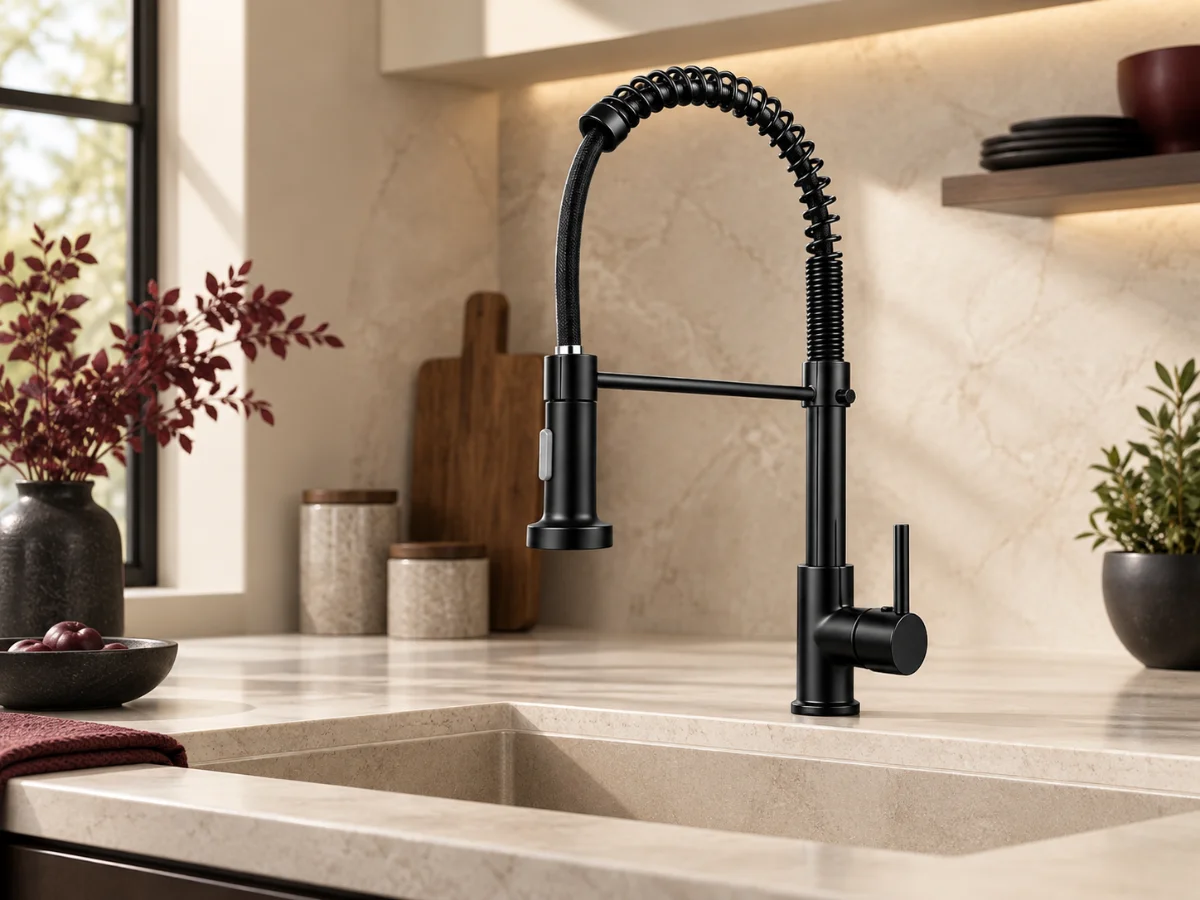
Matte black has grown fastest over the past two years. It has strong visual impact and suits modern and industrial spaces. Matte black hides water spots but shows dust easily.
Gunmetal has stable demand in hotel and commercial projects. Its cool tone and matte texture suit white or gray bathroom spaces.
Brushed gold and brushed brass are warm metal directions and remain popular in vintage and light-luxury styles.
In actual projects, a common practice is to use a consistent finish across different product categories within the same project (lavatory faucets, shower systems, and accessories) to ensure visual consistency. TKJBATH supports cross-category finish coordination; for example, the SL-002 gold concealed lavatory faucet and SL-036 thermostatic shower system can use a unified gold-tone finish.
5. Pre-Purchase Checklist
Before finalizing the material and finish plan, verify the following:
Target market certification requirements: For North America, confirm compliance with NSF/ANSI 61 (Health Effects of Drinking Water System Components) and NSF/ANSI 372 (lead content requirements; the weighted average lead content of products contacting drinking water must not exceed 0.25%). cUPC certification is also a common requirement in North America. For Europe, WRAS or ACS certification may be more relevant.
Water quality of the installation environment: In hard water areas, prioritize ceramic cartridges, and advise end users to clean the aerator regularly.
Expected service life and warranty: PVD finishes typically carry longer warranties and are suitable for projects that require long warranty commitments.
Compatibility between finish and installation method: Wall-mounted or concealed faucets may not need a decorative finish on concealed parts, but exposed escutcheons and handles still need to match the overall style.
There is no “best” material or finish, only the “best fit.” Clarify the target market, use case, and budget range first, then weigh trade-offs against the dimensions above; this is more effective than comparing specifications alone.